
One practice. Three focus areas.
From homes that negotiate sanctuary and street, to learning environments that extend beyond the classroom, to public and urban projects that repair and reimagine civic fabric.
Our projects are shaped by context, grounded in collaboration, and committed to strengthening connections between people and place.
Street and sanctuary
In our residential work, houses establish a strong street presence while unfolding into layered gardens, courtyards, and light-filled interiors.
Robust edges give way to privacy, planting, and carefully framed views — creating homes that are both protective and outward-looking.
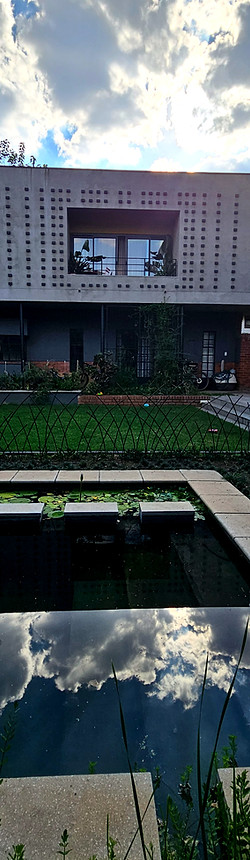
House Sibanyoni

House Arshad

House Giese

House Kleyenstuber

House Courtney

House Van Rooy

House Kottler
Architecture as education
In our educational work, buildings become instruments of learning. Structure, ventilation, and materials are revealed rather than concealed — show how loads transfer, air moves, and comfort is achieved.
Classrooms extend into corridors, gardens, and outdoor labs, reinforcing that learning happens everywhere.

St Andrew's School | Science Block

Wits | GAES Laboratory

Wits | Cinema

St Andrew's School | Hall

Wits | CEM & SoAP Link Building

UMP | Dining Hall

African Leadership Academy

Wits | Chris Seabrook Music Hall

UMP | Administration Building
Urban edges and city life
In our urban work, we reveal and activate overlooked public spaces. Streets, alleys, and building frontages shape movement and pause, while overlooked corners are activated for gathering, events, and connection.
Projects in Brixton and Auckland Park show how subtle interventions can celebrate diversity, highlight hidden spaces, and strengthen existing communities.

Mimosa Alleyway Project

Brixton Light Festivals

St Andrew's School | Masterplan

Public Space Activations